INJ's White House makeover: a "classic" coin.
Author: Jemini, Deep Tide TechFlow
In the cryptocurrency world, very few projects can climb out of the "grave" of the previous cycle twice.
For seasoned investors who experienced the 2023-2024 market crash, Injective ($INJ) was once a name that evoked FOMO (fool's panic). Back then, it was touted as an "on-chain derivatives public chain," and with the support of various market makers, it surged to an all-time high of $52.6.
But during the long period of decline that followed, it became one of the worst-performing coin stars; the price plummeted to the $4 range earlier this year, wiping out more than 85% of its market value, and the community became as quiet as a ghost town.
This situation, in turn, creates opportunities for funds to speculate on old currencies again.
Today (October 16), INJ surged by over 23% in a single day, with a large bullish candlestick reaching $9.16. If you extend the candlestick chart, you'll be surprised to find that in the past month, unnoticed by many, this "old monster coin" has quietly risen by nearly 70% from its bottom, with perpetual contract open interest surging by $35 million in just a few days.
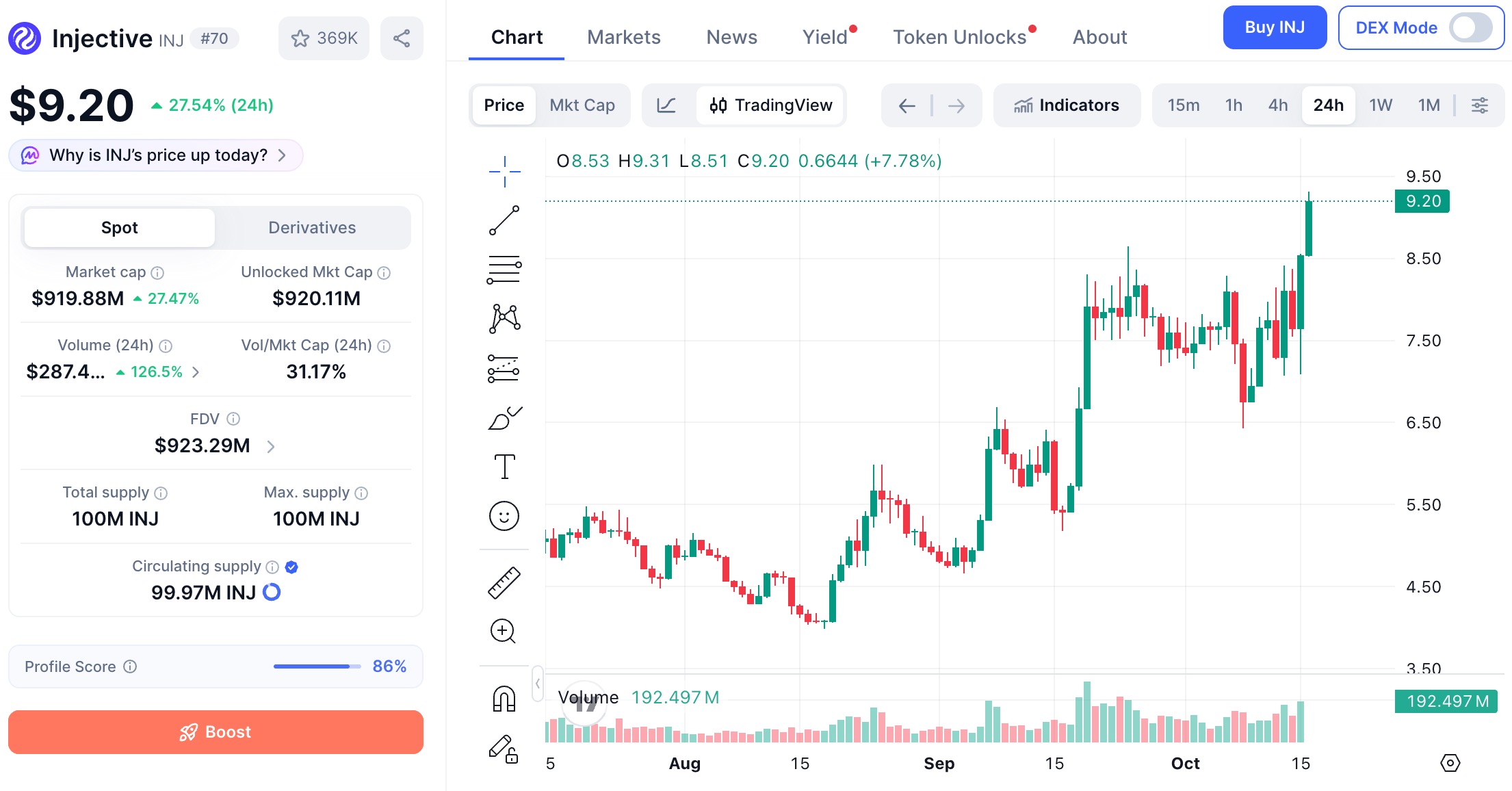
If you look at the timeline over a longer period, you'll find that this is actually a carefully crafted narrative hype surrounding "the US compliant ETF approval process + institutional RWA transformation".
Shed the wild, untamed spirit of the crypto world, and move the poker table into the White House.
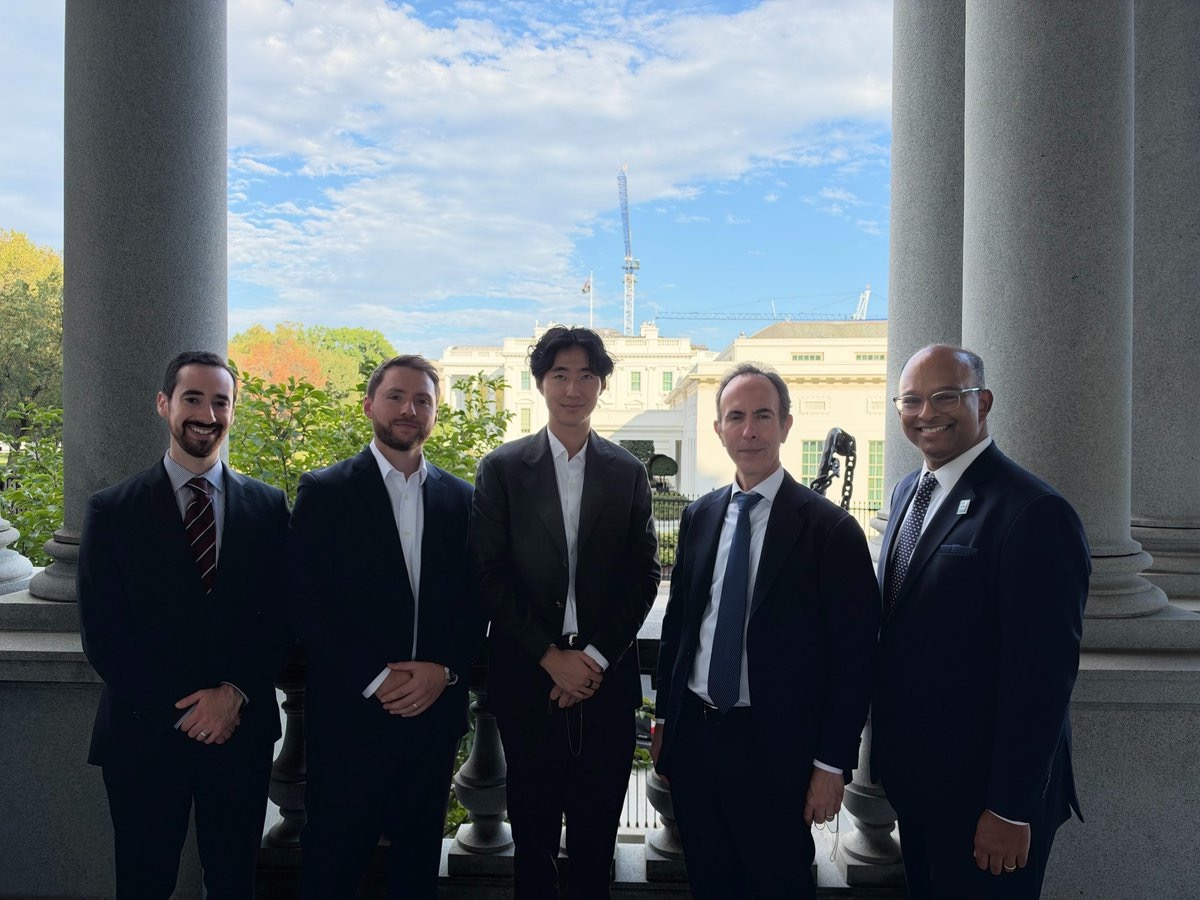
The climax of this short squeeze came in Washington on Wednesday (October 14).
On that day, Eric Chen, co-founder and CEO of Injective, dressed in a suit and tie, along with his general counsel and policy chief, visited senior officials at the White House, the Securities and Exchange Commission (SEC), and the Commodity Futures Trading Commission (CFTC).
When the news reached the cryptocurrency community, bulls became excited, and CryptoCT began to see it as a positive sign of mainstream compliance.
In the crypto market, it's not uncommon for founders to go to Washington to "show their faces." What is unusual is that when Eric Chen went to knock on doors this time, he actually had several compliance cards in hand that would make Wall Street take notice.
Looking back at the timeline of the past two months, you'll find that the Injective team has been quietly working on one thing:
They transformed the old "casino base" that relied on retail investors speculating on fake perpetual contracts into an "institutional RWA private chain" backed by the US government.
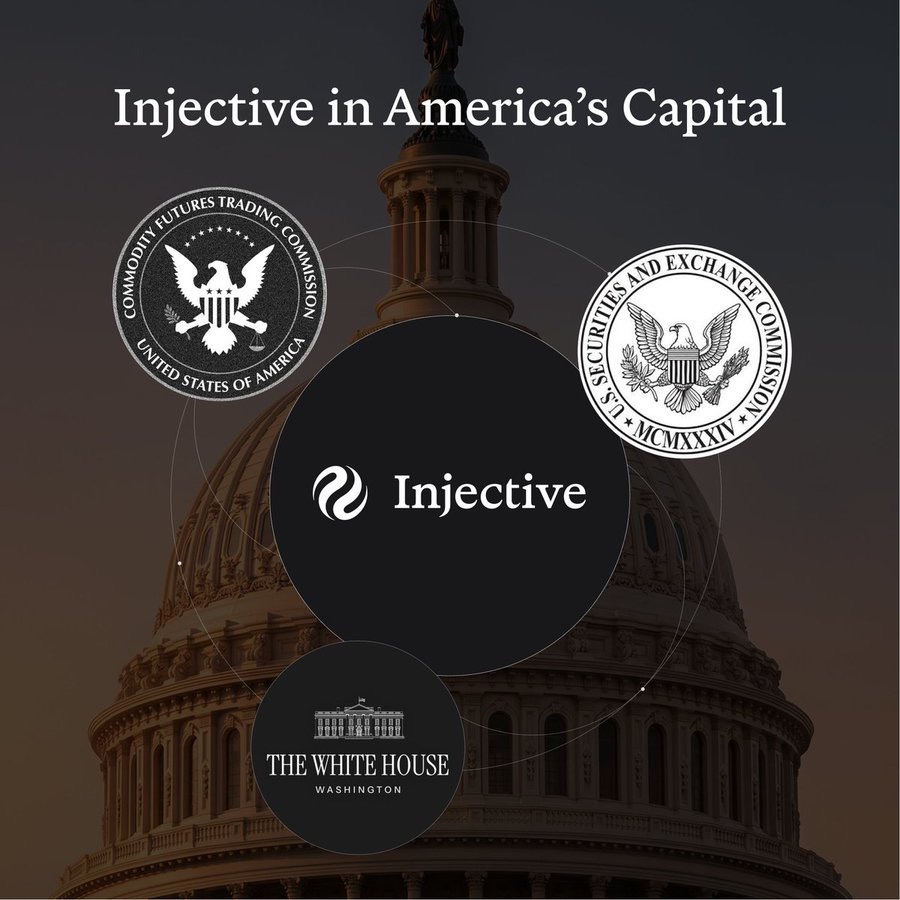
- First, on August 19th of this year, Injective's institutional services entity quietly obtained official SEC registration as a transfer agent.
This license is extremely valuable, meaning it is legally authorized to record ownership and process dividends for on-chain tokenized securities.
- Then in September and early October,21Shares, Canary Capital, and REX-Osprey submitted applications to the SEC for spot trading and staking ETFs of INJ.Canary even aggressively proposed to stake 90% of the INJ in the ETF on-chain to earn interest.
- Yesterday, October 15th, just one day after the CEO left the White House, Canadian listed mortgage giant Pineapple Financial announced its name change to Pentiv and its plan to move its entire$10 billion mortgage portfolioonto the Injective blockchain.
At the same time, the technical parameters on the blockchain are also working closely together to support this "institutional narrative".
The IIP-709 governance proposal,currently being voted on by Injective this week, is expected to conclude tomorrow. It will decisively change all order placement and cancellation operations in the exchange module toa fixed gas fee.
Retail investors may be completely unaware of gas fluctuations of a few cents, but for traditional high-frequency market makers who process tens of thousands of orders every day, reducing transaction friction costs may be the most needed pledge before entering the market.
So you see, from the SEC license, three ETF applications, putting billions of dollars in mortgage loans on the blockchain, to customized fixed gas for institutions, and finally reaching the White House and the SEC office...
This series of actions has changed the narrative. The INJ that used to hype up concepts is now dressed in a full Wall Street compliance suit.
To reignite the narrative that "real income is underestimated"
If the aforementioned compliance background does not directly benefit the price of the token, then the image posted by INJ yesterday is more like an implication that it, as a crypto project, has real projects and is undervalued relative to its market capitalization.
In this chart that summarizes data from 2026 to the present,Injective's "Revenue to Fully Diluted Valuation (FDV)" ratio is as high as 0.95, ranking first among all mainstream public chains.
Following it are Solana (0.83) and Arbitrum (0.78).
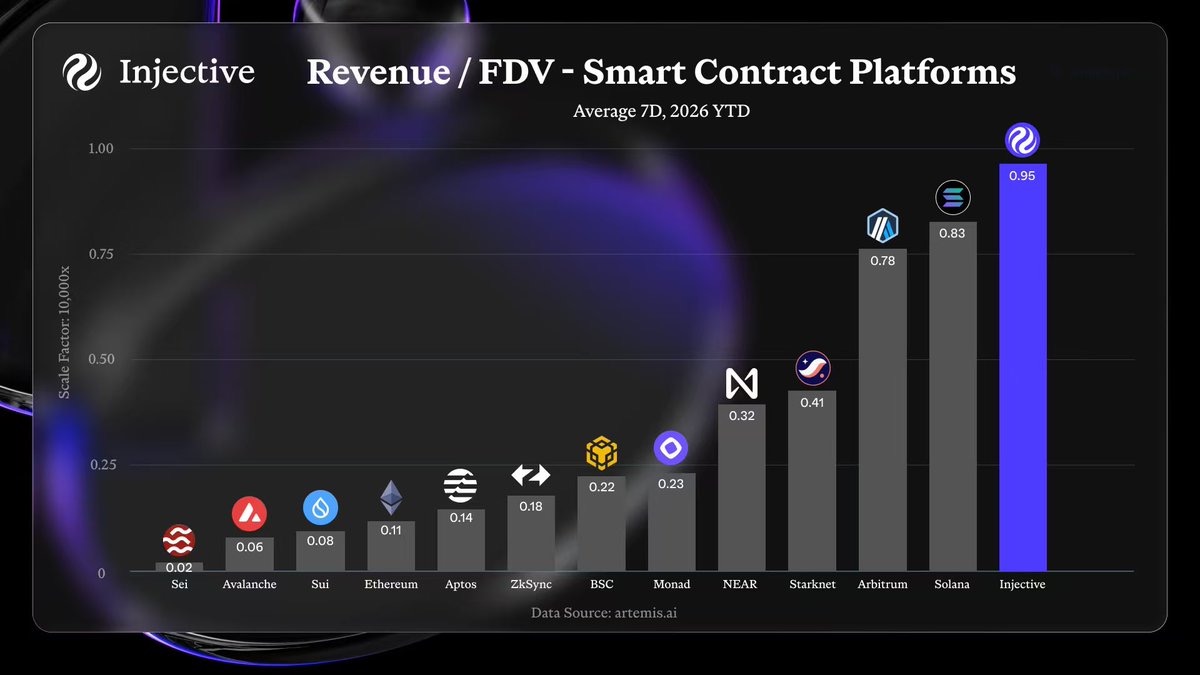
From a real revenue perspective, this ratio on paper suggests that INJ's current market capitalization is relatively small, implying greater potential for growth. Furthermore, considering INJ's share buyback program, it's easy to interpret this data as a bullish signal.
However, I think this is more like a word game.
The "income/FDV" formula is a very clever division formula. To get the highest number, either your numerator, real income, must be incredibly high, or your denominator, FDV, must be extremely low.
Injective's victory was entirely due to the latter.
If you look at the original ledgers of Token Terminal and LunarCrush, you'll find that Injective's actual on-chain protocol revenue over the past year was only about$6 million, andits total fees over the past three years were only $5.9 million. This places it outside the top ten in terms of absolute profitability among mainstream L1 public chains; it's not even a fraction of Ethereum ($3.8 billion) or Solana ($1.6 billion).
The reason it can outperform everyone else in terms of "revenue/valuation ratio" is simply because the price of the coin has plummeted by 85% in the past two years, reducing its FDV denominator to only eight or nine hundred million US dollars.
Competing with Ethereum, valued at hundreds of billions of dollars, on “return on investment” with a small company that has shrunk to less than $1 billion is essentially a highly sophisticated digital public relations game.
Even more intriguing is that inthe comments section of CoinGecko's tweet reporting INJ's price increase today, a veteran user directly posted a screenshot of the Cosmos block explorer Mintscan, revealing another clue:
Why do major market data websites state that INJ's maximum supply is 100 million tokens and that all are in circulation, but the actual total supply on the Mintscan chain has reached 123 million tokens?
This is the rarely mentioned B-side behind many token deflation mechanisms:
Although Injective is making a big show of buying back and burning tokens every month, as a PoS public chain, in order to maintain node security and high staking rewards, its underlying layer is constantly issuing new tokens according to a dynamic inflation rate.
Therefore, it is highly likely that when the $6 million in real revenue generated on the blockchain is burned, it will not be able to keep up with the speed at which the staking printing press spews out new coins.
How far can an old tree go when it blossoms anew?
By putting the positive narratives together with the on-chain data, the logic behind INJ's nearly 70% surge in a single month becomes crystal clear:
The stock is oversold and has a small market capitalization; a rally could occur if it's accompanied by a compliance narrative.
Even if its actual on-chain revenue remains meager, speculative capital and contract funds that missed out will tend to rush in, creating short-term short squeezes. Tomorrow, the vote on the IIP-709 fixed gas proposal will conclude, and short-term bullish sentiment may continue to fluctuate above $9.
But for retail investors, the real significance of understanding this "White House makeover" lies in the fact that you can applaud the team's top-notch political and business public relations and operational capabilities, but never use the high cost-effectiveness of revenue/FDV as a reason for FOMO.
In the absence of further positive developments in market capitalization, the focus in the short term should be on the asset structure, such as changes in holdings and fees, as well as the on-chain trading behavior of whales around INJ.
After all, the main theme of this version of the game is the resale of old coins, and it's possible that more old coins will see price surges in the future, stimulated by certain compliant narratives. INJ is just one of them, but certainly not the only one.
Source:Global Cybersecurity Alliance (GCSA)
Website:www.gcsa.org
ニュースをメールで受け取る
お客様のプライバシーを尊重します。詳細は プライバシーポリシー