Author: Zhang Yaqi, Wall Street Insights
In this wave of AI infrastructure development, capital is pouring into a sector whose economic logic has not yet been validated at an unprecedented scale and speed, while the market is choosing to price "promises" rather than "reality".
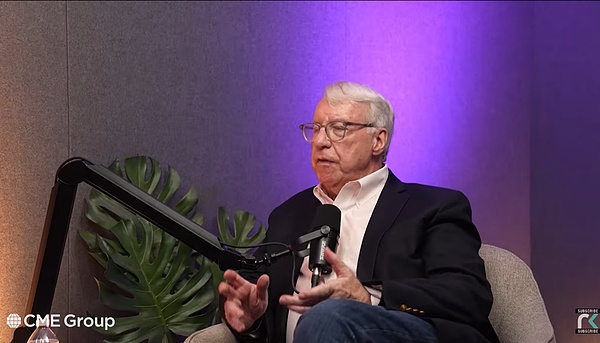
Recently, Jim Chanos, a well-known Wall Street short seller and founder of Chanos & Co., warned on the Risk Reversal podcast that current AI infrastructure investment far exceeds that of the dot-com bubble. Hundreds of billions of dollars in capital expenditure are based on short-term spot pricing, yet are being used to make asset investment decisions spanning up to two decades. Large amounts of equipment are piling up in warehouses, not yet in use, with depreciation being delayed due to accounting practices. Upstream chip suppliers are overwhelmed with orders, while downstream buyers are scrambling to lock in computing power at any cost—but this is fundamentally unsustainable. Chanos stated that this is one of the most contentious moments he has ever witnessed in his career.
This assessment directly impacts the pricing logic of the capital market. Chanos believes that the return on incremental capital invested by hyperscale cloud vendors has dropped from about 40% about 18 months ago to about 20% currently, and if the pace of spending continues, this figure could further decline to 10%. At that point, the management of these tech giants will face a real test of capital allocation—and once they apply the brakes, the entire Neocloud ecosystem, which depends on their orders for survival, will face a chain reaction.
Structural problems more dangerous than the dot-com bubble
Chanos directly compared the current AI infrastructure boom to the dot-com bubble of the late 1990s, but concluded that this time it's worse.
The data he cited was quite telling: Between 1998 and 2002, the two most typical "cash-burning" industries during the dot-com bubble—competitive local exchange operators (CLEC) and fiber optic cabling—spended a total of about $100 billion over five years, roughly $20 billion per year. In the current AI cycle, the annual spending of a single company on data centers and AI infrastructure has far exceeded the combined spending of the aforementioned two industries over five years.
More importantly, there is the nature of the funding source. Chanos points out that during the dot-com bubble, the corporate clients who actually paid for the services—whether it was Bank of America, General Electric, or Coca-Cola—remained profitable throughout the cycle; they simply "cut back on orders." In this cycle, however, hyperscale cloud vendors are the only ones that are truly profitable and bear the costs. Almost all other participants in the ecosystem rely on venture capital or highly leveraged financing to stay afloat.
He also drew a parallel between this investment boom and the balance sheet mismatch before the 2008 financial crisis: at that time, institutions used short-term funds in the repurchase market to finance long-term derivatives books, and this maturity mismatch ultimately triggered a systemic crisis. "It's basically a 'financial common sense 101' level mistake," Chanos said. "People are committing to long-term capital projects based on short-term spot pricing."
The true depreciation pressure concealed by accounting tricks
Chanos specifically pointed out an accounting issue that has been widely overlooked by the market: a large number of GPUs and data center equipment purchased but not yet put into use are currently recorded under the "Construction in Progress" account on the balance sheet, and depreciation has not yet begun.
"This means that these assets are experiencing both economic and technological depreciation, but this is not reflected in the profit and loss statement at all," he said. If we calculate based on the approximately 18-month time lag between GPU procurement and actual deployment, even if the nominal depreciation period is set at five to six years, the actual amortization period is extended to six and a half to seven and a half years.
Chanos stated that Chanos & Co. uses a 10-year depreciation period in its model, "Even so, we still can't get the economics right for most data centers." He also pointed out that this accounting treatment creates a macro-level distortion: the S&P 500's expected earnings growth rate is as high as 28% this year and about 20% next year, far exceeding the historical long-term trend of about 6% per year—"One reason is that one party's huge capital expenditures are recognized as revenue in the other party's profit and loss statement, while the party making the expenditures itself capitalizes this money and does not include it in the current period's expenses."
Neocloud's "asset-light transformation" backfires.
The current AI infrastructure boom has spawned a number of emerging cloud computing companies (Neocloud) operating with a heavy asset model, but recent market trends are shaking this narrative.
In the interview, Chanos specifically named Nebius. The company recently announced a shift to an "asset-light" business model—no longer owning its own data centers and GPUs, but instead becoming a "computing power management service provider" similar to a hotel franchise, outsourcing capital expenditures to third parties and collecting management fees. Chanos described this as a "significant self-contradiction":
"For the past two years, these Neocloud companies have been telling us that heavy assets are the core competitiveness, the 'money-printing machine,' but now one of the biggest players is saying, 'Forget it, we don't need to own these assets anymore.'"
He offered a deeper explanation: both traditional data center companies and emerging Neocloud are realizing that due to labor and equipment shortages, the cost of new projects is skyrocketing, and future maintenance capital expenditures will far exceed the figures previously described to investors. "So they are now rushing to divest their assets as quickly as possible."
He also pointed out that several deals surrounding the leasing of computing power for SpaceX's XAI data center—including agreements with Anthropic and Google each worth approximately $1 billion—all included very short exit clauses, allowing for withdrawal within as little as three months. "I think these deals have a strong publicity stunt element."
Interest rates are the real "time bomb".
In Chanos's analytical framework, interest rate risk is the most underestimated systemic threat in the entire AI infrastructure bubble.
He pointed out that a large number of assets—whether office buildings, data centers, or warehousing facilities—are currently being traded at cap rates of 5% to 7%, while the yield on 10-year US Treasury bonds is around 4.5%. Given this extremely narrow interest rate spread, project developers are promising equity investors a 15% return through stacked leverage and aggressive mezzanine financing.
"Once interest rates rise to 6% or 7%, everything will collapse, triggering a collapse across all asset classes one after another."
He believes that the credit market has not yet shown any signs of concern, but this situation could change abruptly when interest rates approach 5%—widening credit spreads will be a key warning sign. He also noted that spreads on the lowest-rated CCC-rated junk bonds have begun to widen, but those in the BBB to BB range have not yet followed suit.
Chanos also poured cold water on the so-called "power bottleneck" narrative. He stated that power costs for data centers account for only about 5% to 6% of revenue, the smallest percentage of all costs, and that "our country absolutely does not lack electricity." He predicted that the asset premium logic built around the scarcity of electricity is not solid.
When returns fall below the "government bond line," hyperscale cloud vendors will face scrutiny.
Chanos's core assessment is that the capital efficiency of hyperscale cloud vendors is systematically declining and will trigger a real strategic shift within the next 12 to 18 months.
According to their calculations, the incremental return on invested capital (ROIC) for Google, Meta, Amazon, Microsoft, and Oracle as a whole has fallen from about 40% a year and a half ago to about 20% currently. If the growth rate of capital expenditures continues, this figure could fall further to 10%.
"By then, the management of these companies will face a real question: should we continue spending money like this, or is it more worthwhile to buy government bonds?" Chanos said. He predicts that this question will become unavoidable by the end of 2026 or 2027.
He cited Oracle as an example: the company's return on incremental capital related to AI infrastructure is the lowest among its peers, and its stock price has fallen by 65% to 70% from its peak.
"Those CEOs who are truly fulfilling their duties are looking at Oracle and telling themselves: We can't get to that point."
Chanos concluded by summarizing the current market pricing logic and potential turning point in one sentence:
"In a bull market, people are willing to pay a premium for 'promises'; in a bear market, people are only willing to discount 'reality.' We are clearly in the former now. Will we move to the latter? I don't know."
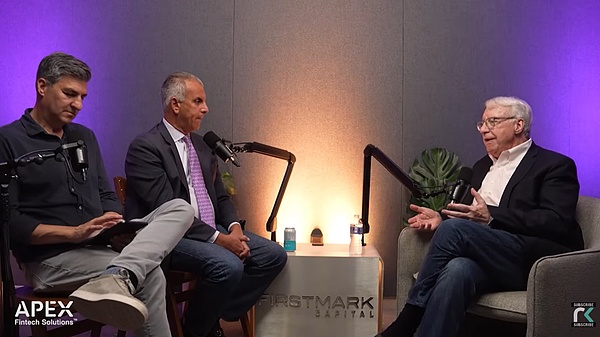
The following is a transcript of the interview:
Dan: I really like this studio, and I'm so glad that Jim Chanos is here today. In today's parlance, it's like an "Irreplaceable Live" (IRL).
Guy: IRL, I'm here in person. Jim, you're the founder and president of Chanos & Co., and you've been incredibly generous in taking time out of your busy schedule to be on our show all these years. How many years have we been doing this segment?
Dan: It should be the sixth year already.
Guy: That's great. Jim, you've always been one of our audience's favorite guests, thank you so much for coming today.
Jim Chanos: Thank you for inviting me, on such a day with 100 degrees Fahrenheit, off-the-charts air quality, and massive traffic jams.
Guy: But the weather always changes, like many things. On a related note, are there any signs of things "breaking down" or cracking right now? A lot of strange things are happening in the world, Jim. I know this is a very broad question, and we'll get into more specifics later, but are there any "cracks" appearing in the market right now?
Jim Chanos: The S&P 500 is essentially at, or very close to, all-time highs. But beneath the surface—as we may have mentioned during our last visit—there's a lot of undercurrents. Many things are performing poorly, while many others are surging wildly. For long-short hedgers, this is a fascinating period of stock divergence. For us, since my last visit, the short side has accumulated considerable alpha—those stocks not favored by the market have been largely abandoned.
Dan: Let me take a step back first. Since the media often refers to me as a "well-known short seller," I'd like to clarify something: when we say "short this" or "short that," it doesn't mean we operate a pure short-selling fund. We actually have a portfolio of models. Let me explain this to the audience briefly.
Jim Chanos: We've built a portfolio model for our clients. We no longer directly manage third-party funds; we only manage our own capital and provide investment advice to institutional clients. However, we do have a portfolio model containing 40 investments designed for hedging. We advise clients on the most effective hedging strategies—either through the S&P 500 index or more customized approaches. We don't actually aim to predict the overall market direction; we focus on assessing the performance of our 40 stocks relative to the broader market, which requires very in-depth fundamental research.
Dan: Let's get back to the market topic a little—you said the S&P 500 is "close" to its all-time high, and I feel like I'm talking about this every day. But apart from sectors like semiconductors, storage, and DRAM performing strongly, other sectors—take this week for example… the "divergence" you mentioned is a good example. When we recorded this episode today, the Philadelphia Semiconductor Index (SOX) was down 3%, and the DRAM ETF was down as much as 10%, meaning the entire infrastructure sector was being bloodbathed. But hyperscaler stocks were generally up 3% to 3.5%, and after a correction of at least 15%, these stocks now almost look like "defensive assets." What do you think of this divergence? We'll discuss the relationship between hyperscalers and the companies that provide the infrastructure for them in more detail later, but as you know, this is one of the strangest market conditions I've seen in the tech sector in a long time—and the S&P 500 is basically flat today precisely because this divergence is offsetting each other.
Jim Chanos: Exactly, that's exactly what I was trying to say. My hedging positions are probably mostly flat today. That's fine, but the sector rotation happening beneath the surface is actually quite dramatic. I know other people are tracking this phenomenon, but the speed at which these sectors switch between being favored and abandoned, and the 5% to 10% daily swings in widely followed large-cap stocks, often without any substantial news changes, just due to fund flows and market sentiment—I think that's quite astonishing, but I also think it's highly speculative, regardless of whether the market is going up or down.
Guy: This has been going on for several months now—there are two or three such sharp up-and-down swings within a week, but the volatility index (VIX) is only around 17, meaning that individual stock volatility is very high, but the overall market volatility is not reflected. Is this inevitable?
Retail investor speculation
Jim Chanos: Yes, I can't say for sure. But all the signs we've been seeing—signs that have been building up for a year and a half—point to increased retail participation and speculation. Now, as we've discussed before, the last missing link in this cycle (at least since 2021), the "supply side," is finally starting to appear: we're seeing record IPOs and secondary offerings, along with increased insider selling.
So now we have the third leg of this "three-legged stool"—generally high valuations, retail investor speculation, and the current large volume of new issuances—which, overall, has never been a good sign for the market. So far, the situation is relatively manageable, but this situation also occurred in the first half of 2021: at that time, we saw a large number of securities issuances, significant divergence in returns, and the overall market was rising—I remember the peak in 2021 was December 31st, but short-selling strategies actually started to take effect after the GameStop incident, that is, by the middle of that year. And the feeling we get about 2026, based on our data and the investment targets we share with our clients, is exactly that—market volatility remains high, and most of the fluctuations are downward.
Dan: This reminds me of The Wire. Have you seen that show? Or did you prefer The Sopranos back then?
Guy: I really like The Wire, and Bunny (also known as Bunk) is one of the characters in it.
Dan: There's a line in the movie that Slim Charles says to Cuddy—Cuddy has just come out of prison, and he basically tells Slim Charles, "Man, the rules of the game have changed." Slim Charles replies, "No, the rules haven't changed, they've just become more brutal." I think that line is quite apt now—although it's not my original thought, but thinking back to 2021, it was truly a "torture" way to die—SPACs (Special Purpose Acquisition Companies) were one of them, with a whole bunch of these flooding the market. We also saw many companies that nobody cared about in 2019 before the pandemic suddenly see their stock prices skyrocket. Do you remember Snap going from $5 to $80? PayPal was a similar case, and there are countless similar examples.
Let's talk about the issue of issuance volume: SpaceX had a $75 billion IPO, followed almost immediately by a $25 billion bond issuance—just a week after Google completed an $80 billion (I know you've commented on this before) financing round, later revised to $85 billion. We also know that Meta was in a similar situation, and so on. Could you analyze for us the combination of IPO, secondary market offerings, and debt financing, because many companies currently raising debt—not the hyperscale cloud vendors, but companies like Neocloud (an emerging cloud computing company) and Oracle, which are close to junk-rated—are raising funds in a way that, given their importance to the narrative of AI infrastructure development and market sentiment, I think is a very noteworthy difference.
SpaceX, Google, Meta
Jim Chanos: Yes, the amount of debt financing in the market is much larger than people realize, and much of it is "off-balance-sheet" financing, as you all know. This complicates matters further. Hyperscale cloud vendors themselves are now issuing equity and debt on a record scale—so in this extremely hot AI infrastructure sector, credit demand is flooding in, and the returns on these investments are extremely uncertain, which we'll probably discuss later.
Interestingly, you know, in 2005 and 2006, people took out loans to buy overvalued properties. But ultimately, the properties themselves retained their value—although prices fell for several years as those with excessive leverage or insufficient income to support their mortgages defaulted, the property prices themselves remained largely stable, and the assets themselves preserved their value.
This time, however, it's completely different: the projects we're investing hundreds of billions of dollars in are likely economically illogical from day one—I'm not talking about the models themselves, but the physical buildings, assets like data centers. You simply can't make those numbers work at any meaningful level, yet more and more capital is flowing into these asset classes with increasingly lower returns. I think this is something that will be very noteworthy and worth watching to see how it evolves.
Guy: Okay, let's put that topic aside for now and come back to it later. The credit market isn't showing any signs of concern at all right now. Perhaps—you understand this better than I do—the credit market is "indifferent until it starts to care," and once it does, things often happen very quickly. Our current interest rate environment is on an upward trajectory, and from both a market and economic perspective, the US is not currently prepared for further interest rate increases. What do you think?
Jim Chanos: There are far too many projects being planned with mid-single-digit pre-tax returns in mind—whether it's office buildings, data centers, or warehouses, almost everyone is trading at 5%, 6%, or 7% cap rates, while the 10-year Treasury yield is around 4.5%. So all you need to do is add a lot of leverage, plus some pretty aggressive mezzanine financing, and you can tell equity investors, "I can give you a 15% return"—that's how it's done right now.
Once interest rates rise to 6% or 7%, everything will collapse, triggering a chain reaction across all asset classes. I believe this is a severely underestimated risk, and discussions often focus only on topics like data centers. Take New York, where we are now, for example. SL Green (an office building REIT) has a capitalization rate of about 5%—SL Green's stock price has barely risen in 25 years, making it a very poor investment.
So their office assets have always been a bad investment? We don't hold any shares in SL Green, but I would argue that this can serve as a bellwether, reflecting how low people are willing to capitalize on assets—the same logic applies to the stock market. But as soon as interest rates rise to 6% or 7%, the whole system will fall apart.
Guy: What's interesting is that these companies can set their own capitalization rates, but the market doesn't necessarily have to accept those numbers. The market can easily say, "This is ridiculous," but the reality is they are indeed moving in that direction. So let me ask you this: you say everything will collapse when it reaches 6%, but the market will definitely "smell" the danger before the Treasury yield actually reaches 6%, right?
Jim Chanos: Yes, the market will sense it in advance.
Guy: So where is this critical point roughly? What kind of "boundary" is it?
Jim Chanos: I'm not sure exactly where, but I have some ideas. If we see yields accelerating toward 5%, and the market generally feels that rates may rise further, I think credit spreads will start to widen—and that's exactly the signal you need to watch. You mentioned before that spreads on the lowest-rated junk bonds (like CCC) have already started to widen, but in the BBB to BB range, spreads haven't widened yet. I think we need to see rates move quite strongly toward 5% before credit investors start to rethink, "Maybe I shouldn't have bought this office building at a 4.5% capitalization rate."
Guy: I heard you say that the current situation is somewhat like a "replay" of the market boom in the late 90s, right?
Jim Chanos: Yes, but the situation was worse than that.
Worse than now
Dan: Worse, okay. I'd like you to explain why, could you draw a line—you already touched on it a little earlier—connecting the internet infrastructure development of that time with the financial crisis we experienced afterwards? Because one thing particularly alarmed me, about six months ago, when Meta announced that Louisiana data center project, with Blue Owl, an SPV (Special Purpose Vehicle), and KKR involved, and as a not-so-savvy stock options trader at the time, I really struggled to understand the structure. Later I looked at some of the specific terms—Meta only had a 20% stake in the project, and there was a three-year exit clause, and so on. I thought to myself, if you're one of the biggest spenders in this space, but you're unwilling to actually put that debt on your balance sheet, how "reliable" are these so-called "long-term contracts"?
Jim Chanos: It seems like nobody really wants to hold these "hard assets" right now. We can talk about this topic in more detail later, as there have been some new developments this week.
Yes, it's truly incredible. In the infrastructure development during the dot-com bubble, there were essentially only two business models doomed to fail from the start. One was CLEC (Competitive Local Exchange Operator), which essentially involved installing a telephone exchange in every building in Manhattan, requiring everyone to have their own telephone switching equipment. Companies like Lucent and Nortel invested heavily in supporting these customers to purchase their equipment. The other was fiber optic cabling. While this model eventually worked, the payback period was far too long, leading almost all fiber optic companies to default.
We reviewed the archives last year, and the two industries combined spent a total of $100 billion between 1998 and 2002—meaning that despite the large amount of financing they received at the time, the two industries combined only spent about $20 billion per year.
Guy: How much would that be in today's US dollars?
Jim Chanos: That's not the point. What I'm trying to say is that this number is a drop in the ocean compared to the amount of money that a single company has raised in data centers and AI infrastructure in this current cycle—and whether those projects will ultimately be profitable is still entirely unknown.
Regarding the composition of the figures—during the dot-com bubble, most of the spending actually came from enterprise clients such as Bank of America, Merrill Lynch, General Electric, and Coca-Cola. These companies were primarily networking their internal computer systems, with some spending also stemming from concerns about the Y2K bug and the replacement of PCs. Overall, these companies remained profitable throughout the cycle; all they did was cut orders—a point I've been emphasizing: if Coca-Cola ordered 10,000 routers from Cisco in 2000, by 2001 they had reduced the order to 2,000, their order book collapsed instantly, and profits collapsed simultaneously. But overall, the real spenders—telecom operators and enterprise clients—remained profitable during that period.
In this cycle, hyperscale cloud providers are the only ones who are truly profitable and bear the costs, which can be considered a "cornerstone." However, almost all other participants in the ecosystem are not necessarily profitable at present. They rely on a large amount of venture capital to build data centers or train AI models. Therefore, in terms of the absolute scale of capital expenditure and its proportion relative to the economic size, the current figures far exceed those of the cycle in 1999 and 2000.
Guy: Moses inscribed the Ten Commandments on stone tablets, and it's said he inscribed them more than once. Yes, the Ten Commandments, but it took quite a bit of text.
How deeply is it etched? I'm referring to the concept of the "sacredness of capital expenditure"—people seem to think it's engraved in stone, unshakeable, and that capital expenditure will continue regardless of market conditions. Do you really think that's the case?
Jim Chanos: No, history tells us that this is not the case.
Guy: So why are people so willing to believe this now?
Jim Chanos: Because the marginal return on net capital expenditure is currently very high, that's the reason, it's that simple. Right now, if you dig a hole, find a customer, you can claim, "I can lease out this capacity and earn X% in revenue," which is equivalent to a 20% or 25% return on capital. But the bad news is, I can probably only guarantee this price for one or two years, and after that, it depends on the situation. The asset you're building, however, is an asset with a lifespan of 20 years. In other words, people are making long-term investment decisions based on short-term spot prices, which is a very dangerous thing. We've already seen this in the shale oil industry.
We've seen similar situations in many industries—for example, the railroad industry in the 19th century. At that time, railroad freight rates were extremely high, which spurred massive duplication of construction. For instance, many routes, such as from New York to Chicago and from Chicago to St. Louis, had double or even triple the capacity. When demand subsided slightly, freight rates collapsed, and railroad companies went bankrupt one after another. Therefore, matching the "maturity" of assets with the "maturity" of funding sources is extremely important.
A similar thing happened on the other side of the balance sheet during the global financial crisis—people used short-term funds from the repo market to finance the long-term, unsellable portions of the derivatives books. When everyone suddenly realized the severe maturity mismatch, the lenders of the repo funds demanded repayment, and the assets themselves still couldn't be sold, everything collapsed.
So one of the biggest "financial common sense 101" level mistakes I've seen so far is that people are committing to long-term capital projects based on short-term spot pricing. Considering the speed at which AI models iterate and update, the inverse competitive relationship between models, and the fact that demand will be completely unknown two years from now, this is actually a very big gamble—and the most typical example of this is DRAM (Dynamic Random Access Memory).
Dan: Micron is clearly a prime example. They've been dominating this market, and suddenly they realized that training models requires high-end GPUs with high-bandwidth memory (HBM), and things like that. Micron is a great example—I remember after their last earnings release, some big journalists and some major bulls were talking about "long-term agreements" (LTAs), they were talking about order books, residual performance obligations (RPOs), and long-term agreements. You just used the word "sacredness"—we've seen that before.
Micron's gross margin was negative three years ago. How much future revenue expectation based on an 80% gross margin would you be willing to give to a company that has gone from a negative gross margin to where it is now? About 18 months ago, its stock price was only around $100. Recently, it once surged to $1250, and now it has fallen back to $950 - which seems outrageous to me.
There's another point I'd like to hear your opinion on: Nvidia's revenue has been basically doubling for the past three years. If everyone knew that next-generation chips like Blackwell and Vera Rubin would require increasingly expensive and advanced memory to function, why didn't Micron expand production in time? What did they see and what didn't they see? What was their visibility like at the time? So what I want to ask is, what makes you believe that these long-term agreements—the large number of orders that the market is currently using to boost their huge market capitalization—will really be fulfilled as scheduled in the next few years?
Jim Chanos: Historically, we should be highly cautious about this viewpoint. Let me look at it from another angle: In this boom, a small group of companies acted as "gatekeepers" and "pricing setters," and Nvidia was one of them. In the hardware sector, no company should be valued higher than Nvidia—this is one of our core principles, and the reality is that most companies have adhered to this, especially some rather questionable data center companies. Any company that depends on Nvidia chips, that depends on Nvidia to survive, should not be valued higher than Nvidia itself.
But the reality is that many companies are exactly like this. This again illustrates that even within the AI sector, there is an extremely polarized way people buy and evaluate stocks. No one has truly stepped back to examine the entire ecosystem: what is sustainable and what isn't; what is a flash in the pan and what isn't; what is based on spot pricing rather than long-term contract pricing—should I continue building my 45th data center in Abilene (home to a cluster of data centers in Texas)?
Guy: Okay, based on this premise—that no company of this type should be valued higher than Nvidia, which I agree with—is the market somehow implying that Nvidia cannot maintain a 75% gross margin forever, and that once that gross margin starts to decline, the currently seemingly reasonable valuation will actually become more expensive? Is this the underlying meaning of this logic?
Jim Chanos: Currently, before Nvidia faces real competition—although competition has begun—their gross margins look quite stable for the next year or two. It's hard to say what will happen after that, but frankly, it's difficult to predict anything beyond two years because the physical capacity building cycle itself takes about two years—building a new DRAM factory, expanding capacity, and developing better GPUs all take that time. The technology iteration cycle is actually very short, a fact often forgotten, and there's a strong incentive to accelerate technological iteration. So, basically, the window of opportunity you can look ahead is only one or two years. But as I said before, the huge capital projects people are now promising have return cycles far exceeding two or three years, and that's the problem.
Dan: Yes, I feel the valuations are getting a bit unbalanced—if we look at it in the Nvidia framework you mentioned, for example, the gross margin, which dropped to 71% last year and then started to rise again—the concept of a "bottleneck" is actually where investors see opportunities; it's essentially a supply and demand issue. But the more I read, the more I feel—I remember Michael Burry wrote an article about this last week—that Jensen Huang wants to keep iterating from Hopper to Blackwell to Rubin, but in reality, there are tens of thousands of these next-generation GPUs that haven't even been "plugged in" and put into use yet.
There are several reasons. First, it's not easy to remodel a data center built around an architecture like Hopper...
Accounting methods
Jim Chanos: Okay, now I'm going to put on my "nerdy accountant" hat and say something—the reason these companies are unaffected right now is because those chips piled up in warehouses that haven't been plugged in yet haven't been depreciated, which is considered "construction in progress" in accounting.
I've been emphasizing this point: if you look at the balance sheets of companies that spend heavily, you'll find a sub-item called "Construction in Progress" under "Property, Plant and Equipment" (PP&E) that keeps expanding—this is basically equipment that hasn't been put into use yet, or capitalized interest expenses, or capitalized labor costs for projects that haven't started operating. Accounting standards allow them to postpone the depreciation of these costs until the relevant revenue actually begins to be generated. Therefore, these companies won't be affected in the short term.
We've discussed another issue before: massive capital expenditures generate revenue and profits for companies like Nvidia, but these companies themselves generally don't expense these expenditures, choosing instead to capitalize or defer them. This explains the situation with S&P 500 earnings forecasts—the long-term growth trend for S&P 500 earnings per share is roughly 6% annually, while I recall this year's forecast is around 28%, and next year it's expected to be around 20%—incidentally, this also happened at the end of the dot-com bubble in 1999 and 2000. You can't expect growth rates four to five times higher than the long-term trend unless something like this happens: a dollar's expenditure becomes a profit for another company, rather than a cost. That's exactly what's happening now.
Guy: So, the accelerated obsolescence of these assets has not been actually accounted for yet; they are using the historically used depreciation model. Is this understanding correct?
Jim Chanos: The current debate revolves around whether the depreciation period should be five or six years—hyperscale cloud providers and Neocloud currently use five to six years, but the reality is worse because depreciation for many assets hasn't even begun yet—meaning that depreciation might not actually start until 18 months after receiving the GPU from Nvidia. This effectively means that the chip's depreciation period is stretched to seven and a half or even six and a half years.
Incidentally, we used a 10-year depreciation period in our model for conservative reasons—even so, we still couldn't get the economics right for most data centers. But if we used a five- or six-year depreciation period, the situation would be even worse. But as I just said, the reality is even worse because the "construction in progress" accounting treatment means that a large amount of assets are actually idle, undergoing both economic and technical depreciation, but this is not reflected in the profit and loss statement (P&L).
Guy: You guys used 10 years, they used about 6 years, so how many years "should" it be to be reasonable?
Jim Chanos: According to our research, if these chips were to run 24/7, they would burn out in about 10 to 12 years—meaning that the physical lifespan of many of these types of hardware is about 10 to 12 years, but this does not take into account the factors of technological iteration and the obsolescence of equipment.
But now let me play the role of the bull: "Yes, but you see that spot prices have remained high and haven't seen a straight drop, so these devices can actually be used indefinitely and will never become obsolete"—of course, using spot prices to support this argument is itself a logical fallacy.
Dan: Interestingly, I saw an article today about a Neocloud company considering launching some kind of derivatives tool to hedge price risk. Coreweave is reportedly looking for ways to hedge against asset price declines, which I find quite interesting, considering the current market narrative surrounding them—
Neocloud and Space Data Center
Jim Chanos: Theoretically, they should, but the current market narrative is that "the value of these assets will only go up, not down." That's exactly what I'm finding important. But a bigger new development today is Nebius—they announced a new "asset-light" business model. I saw this news on my way into town this morning and couldn't help but laugh out loud because this is the most asset-heavy of all the Neocloud companies.
They invested $4.40 in capital to generate $1 in revenue, and then they came out and announced: "Oh, by the way, we have a new business model: we'll provide you with the software stack, and we'll market your assets to customers who need computing power, but you'll be responsible for the data center, GPUs, capital expenditures, and maintenance capital expenditures; we'll only manage it for you." It's a bit like Marriott's franchise model, right?
I thought to myself, wait a minute—for the past two years, these Neocloud companies have been telling us that "heavy assets" are what we should be pursuing because they are "gold," and we should own these physical assets because they will print money for us year after year—and now, one of the biggest emerging players is telling you this morning: "Wait, actually, we don't need to own these assets anymore; we just need to manage them." I think this is a pretty significant "self-contradiction."
Guy: This isn't too different from what Meta announced last week in many ways—they suddenly said they had surplus computing power to rent out, essentially operating as a "hyperscale cloud provider," while the company has actually stumbled and made repeated mistakes with Meta AI and its various models.
Jim Chanos: Let's take it a step further—one of my favorite targets, the traditional, established cloud data center companies, is now suddenly putting their portfolios up for sale. One company that went bankrupt in 2023 is trying to relist—the old-school Cyxtera is relisting under the new name C². Meanwhile, executives from these companies are leaving one after another. So these traditional data center companies are suddenly starting to "sell off assets."
I have a theory to explain why this is happening now: both traditional data center companies and emerging Neocloud companies have suddenly realized that the cost of new projects is skyrocketing due to labor shortages, equipment shortages, and other factors. They realize that future maintenance capital expenditures will be much higher than they previously told investors, and therefore returns will decline further from their already low levels. So they are now rushing to divest their assets as quickly as possible.
Dan: Let's talk about SpaceX then—though not exactly about space data centers.
Jim Chanos: Just before the IPO, we all knew that XAI was a "bottomless pit" when it came to overbuilding beyond its own needs and then renting out the excess capacity—remember, in February of this year, XAI was acquired with SpaceX stock at a valuation of $250 billion.
Dan: Yes, and then they made two more deals, one with Anthropic and one with Google, both spot deals.
Jim Chanos: Yes, and they all come with very generous exit clauses—you can exit within three months, and think about what that means.
Dan: They each paid around $1 billion, and the capacity won't be up and running until this fall. In the meantime, both companies can withdraw at any time—Musk even tweeted when these deals were made that these were very short-term agreements.
Guy: It sounds a bit like "robbing Peter to pay Paul" in order to close this deal and make the headlines.
Jim Chanos: I think these deals have a strong promotional element.
Dan: Yes, and it's worth noting that Anthropic and Google themselves have a strong incentive to "utilize" this excess computing power to some extent.
Going back to last fall—a period marked by repeated strategic missteps—Satya Nadella (Microsoft CEO), who stated around October or November that they were no longer constrained by computing power but by energy. Now, despite continued increases in capital expenditures, are signs of "overcapacity" emerging? At the beginning of the year, Amazon increased its capital expenditure budget from $120 billion to approximately $200 billion.
The Myth of the Power Bottleneck
Jim Chanos: Microsoft recently announced an agreement for Chevron to directly supply them with power. There's one thing our country absolutely has no shortage of: electricity. Of course, there are transmission issues and regulatory issues, but we don't lack cheap electricity. I've been emphasizing to those who tout "space-based data centers saving money" that data center electricity costs only account for about 5% to 6% of their revenue—the smallest percentage of all costs. So, looking at a two- or three-year timeframe, electricity won't be a problem at all. We'll find ways to overcome these bottlenecks, we'll find ways to connect various data centers to the grid—in Texas, currently the largest market for new data centers, they're already doing this in various ways.
Electricity won't be a real bottleneck. Many data center project narratives are based on statements like, "We've already got permission to connect to the Texas grid"—okay, fine, but the Texas grid will charge you wholesale prices, and you need to read the contract details carefully. So I think that's pretty ridiculous.
I think data centers may face more political opposition—we're already starting to see signs of that, and that could be a bigger problem—but I don't think "the availability of power" will be a real bottleneck due to scarcity, as some bulls believe.
Guy: When will the market start demanding that these companies deliver a real "Return on Invested Capital" (ROIC)? Because they haven't been asked to do so yet.
Jim Chanos: Yes, not yet. These companies are currently trading their stock prices based on "announcements"—for example, "Company X and Company Y have signed a 20-year agreement to provide data center services and power," and then the stock price rises or falls accordingly. Recently, these announcements have resulted in more declines than rises in stock price.
In other words, the market has begun to realize that not all of these deals are "good deals." I think this is a very important shift. We are also closely monitoring another metric for our clients: the "return on incremental invested capital" for hyperscale cloud vendors—I remember sending you this chart after the first quarter; this number is declining, and declining quite rapidly. These cloud vendors are now generating less operating profit at the margin for every additional dollar they spend. The overall level is still healthy, but as a whole, this metric has fallen from around 40% a year and a half ago to around 20% now. If this rate of spending continues, this number will likely fall further to around 10%. At that point, hyperscale cloud vendor management will truly face a difficult choice: do we continue spending like this, or simply rent capacity from others?
Incidentally, if Google, Meta, Amazon, Microsoft, and Oracle as a whole have a pre-tax incremental return on invested capital of only around 10%, then these Neocloud companies are in a rather precarious situation.
Dan: What do you think Jassy, Sundar (Google CEO), and Satya will think? They run three of the largest cloud platforms, and they'll be watching Oracle—back to last September, after the announcement of Oracle's hundreds of billions of dollars in residual performance obligations (RPOs), order backlogs, and long-term agreements with OpenAI and AMD, Oracle's stock price immediately filled the 30% gap the next day and continued to rise. Now, from that high, the stock price has fallen by about 65% to 70%—even after a rebound a few months ago, it has almost halved again, falling by 50%.
What do you think these CEOs can deduce from looking at Oracle?
Jim Chanos: Oracle's ROI metrics are the worst of all its peers. So those other companies—if they're really doing their jobs properly, and I think they are—are looking at Oracle and thinking, "We don't want to fall to that level; we need a higher ROI than that bottom guy."
This is why we've been closely monitoring this metric for our clients—capital expenditure figures have been consistently revised upwards, and expectations have been revised upwards as well, but operating profit expectations haven't kept pace. Therefore, we anticipate that by the end of 2026 or 2027, there will be a point where, besides us, more people will start seriously calculating: "Wait, is the next trillion-dollar investment really worth it? If we only end up making $50 billion from it, it's more profitable to just buy government bonds." I believe we'll reach that point in the next 12 months.
Apple's decision
Guy: Going back to your earlier point—the market seems to be picking up on some trends, and it seems to be picking up on companies that have been holding back and not making big spending. Apple comes to mind—during the time we were recording this show, Apple's stock price surged, which I think is largely because it's been "watching from the sidelines," observing the actions of other companies. What do you think of this phenomenon? I'm not specifically referring to the stock itself, but rather I'm asking whether Apple's "wait-and-see" strategy has actually been the right one?
Jim Chanos: I think they didn't take the kind of risk that other companies do, a risk that will likely prove untenable in the end. Of course, I don't know what these AI models will ultimately produce—I call it "magic," and maybe there will be amazing results. I'm just really worried about the capital-intensive end of the industry, because money is flowing there, credit is flowing there, off-balance-sheet financing is flowing there—if things are going to go wrong, the collapses will definitely happen there.
Dan: Speaking of Apple, the Apple lawsuit against OpenAI—we've seen plenty of accusations of "stealing trade secrets" in the industry, but haven't we seen so many researchers frequently jumping between Anthropic, OpenAI, and Microsoft? For a traditional company like Microsoft, this is actually a huge loss of talent.
Jim Chanos: Yes, and by the way, this switching cost isn't just reflected in employee job-hopping; the friction cost for users switching between different models is also very low, which I think is one of the hallmarks of this boom.
Dan: Looking at the Apple situation, and then at the relationship between Sam Altman and Elon Musk—they used to be "friends and rivals," but are now gradually becoming true adversaries. I think as we move past 2026, maybe into 2027, these companies will be suing each other. Frankly, the lawsuit between OpenAI and Microsoft is bound to happen sooner or later. At some point, I think these narratives will become very confusing, largely due to this "revolving door" financing model. Bloomberg has been updating a great chart and tracking this issue.
Let's talk about this topic briefly, because it reminds us of the situation in the late 1990s, which you mentioned before—without Nvidia's investment in these companies, I don't even know if the money was really "changing hands" or if it quickly circulated back into the company.
Jim Chanos: I mean, nobody's particularly worried about this issue because this investment doesn't represent a large percentage of Nvidia's balance sheet—by the way, it wasn't a large percentage in the Lucent and Nortel cases either, if you go back and check the historical data. But this kind of equity investment enables the investee to raise further funds and issue bonds, which has a leverage effect, right? And when they need to raise funds, they use this equity as collateral.
So this does have a substantial impact. These numbers are indeed large in absolute terms, but they are still relatively small relative to the scale of the entire AI infrastructure—and I want to emphasize again that the scale of this infrastructure is truly enormous.
Guy: But I suspect this also reflects, to some extent, a kind of inbreeding relationship among the "founding figures" in this circle—they initially helped and invested in each other, but now they've basically become competitors. How these relationships will evolve next is something I think will be very interesting to watch.
Jim Chanos: The "epicenter" of this event is not the banks. Although banks have historically often been the epicenter, this time they are just peripheral participants in this drama.
Guy: And banks as a whole have consistently performed quite well. What's your take on valuation? Putting aside the price-to-earnings ratio, some historical valuation metrics are starting to look a bit expensive—for example, JPMorgan Chase's current price-to-book ratio (relative to tangible book value) is already over three times.
Jim Chanos: Yes, yes. We didn't invest in bank stocks, but we shorted a large private equity firm that I think was doing a lot of unwise things.
Guy: Your short positions must be doing pretty well, considering that the stock performance of these private equity firms hasn't been that great.
Jim Chanos: That is indeed one of our major short positions in the financial sector.
Guy: Does this have anything to do with AI spending? Blackstone and Apollo...
Jim Chanos: Yes, Apollo and Blackstone made a deal about a month ago, in early June, where they raised $35 billion to invest in things like TPUs, though I don't remember the specific details. The company we shorted is involved not only in AI but also in office buildings, operating in a world of "low capitalization"—once capitalization or interest rates rise, this company will be in big trouble.
Dan: Yes, and regarding the line you just drew, banks are lending heavily right now, so the entire AI infrastructure seems to be becoming increasingly "financialized," permeating other areas of the economy. This morning, the Financial Times had an article saying that banks have practically become "AI concept stocks" now, because all the trading activity surrounding these related targets is driving up bank performance. We all remember this narrative trope—and I want to be very clear to the audience and viewers, some might say, "You're leading questions," but everyone knows Jim's position; he's always been very candid, openly discussing these views on podcasts, events, and Twitter.
Guy and I were just trying to get to the bottom of things. We're following the news just like everyone else. We're not exactly tech-savvy, but I don't think you need to be—because the most tech-savvy people actually building these models, or those who believe hundreds of billions should be invested in data centers, are clearly overlooking some obvious issues. So I'm curious, how do you think this will ultimately end? Can we summarize this conversation? For example, will the bulls ultimately prove right? We've talked about things like space data centers, and some of the smartest people I know—investors, for example—believe that space data centers will bring about a huge release of capacity. I really don't know how to judge that… By the way, Sam Altman is right on the opposite side of this issue, and you feel he has a strong incentive to support this "space data center" argument. So it feels like the divide between the bulls and bears is really huge.
Promise vs. Reality
Jim Chanos: Disagreements have always existed, but I think the current level of disagreement is probably the biggest I've seen in my entire career. Listen, this will eventually be like the internet—this wave will eventually produce some huge winners, and the development of AI will definitely create real wealth on the back end.
But we are now in a phase where almost everything is priced as if it has "already succeeded" or "will definitely succeed," which was the problem in 1999 and 2000—when everything was valued as "new economy stocks," as if demand were infinite, and so on. It took several years for the market to gradually realize that this was not the case, that the basic laws of economics and finance still held true, that order books eventually collapsed, and that profits eventually declined—a real bucket of cold water for that then-hot market.
We're currently at the same stage: you can build all sorts of "castles in the air" on a narrative level—to use the analogy of "space data centers"—and this kind of talk can't be disproven for the time being. When you see companies like Tesla and SpaceX whose valuations are entirely based on "promises," who can say that "my company" can't enjoy the same valuation treatment? It's purely a matter of investor psychology, a question of "whether a half-full glass is empty or not."
I've been emphasizing this point repeatedly: in a bull market, people are willing to pay a premium for "promises"; in a bear market, people are only willing to discount "reality." We're clearly in the former situation now. Will we end up in the latter? I don't know.
Guy: Thank you again, Jim Chanos, for being a guest on our show.
Jim Chanos: You're always welcome. I'm always happy to chat with you.
Source:Global Cybersecurity Alliance (GCSA)
Website:www.gcsa.org
Get updates in your inbox
We respect your privacy. See our Privacy Policy